
New Orleans
Nomad Chronicle Parts Three and Six

This whole thing I’m doing, this chronicle of all the places I’ve called home, is a journey. But if I’m honest, it’s less of a road trip and more of a pilgrimage, a return to sacred ground. And if my life is a map, then New Orleans isn’t just a city on it; it’s the place my soul was born, lived, and reborn. I lived there twice, and both times, it wasn’t just a place I existed in—it was a force of nature that lived inside me. It’s the only city that has ever truly felt like home.

The first time I came to the Crescent City was back in the summer of 1995. I was 19, a kid with a head full of nothing but impulse, and a trunk full of all my worldly possessions. My parents had just given me their car, a red 1991 Ford Escort with those quirky automatic seatbelts that would glide into place when you shut the door, a little robotic arm sealing you in. I'd just left a girl I was pretty into in Akron, Ohio, and with a trunk full of all my worldly possessions, I drove straight through, an east-to-west road trip that suddenly curved south, beckoned by a city I knew only through postcards and jazz albums. The miles blurred by, the air growing thicker and heavier the further south I got, until finally, I crossed into Louisiana, and the world seemed to turn a shade of green I'd never seen before. A family friend had generously offered me a place to crash, and from the moment I arrived, a strange, undeniable fire lit up in my gut.
I fell hard and fast. The air itself felt different, thick and heavy with humidity, smelling of sweet jasmine, old brick, and something a little spicy. Music wasn't just in clubs; it bled out of every doorway—jazz, blues, and brass bands you could feel in your chest. I’d walk the streets and hear it, a constant, soulful soundtrack to everything. Even though I was a wide-eyed kid, I learned quickly. I was robbed a few times, once at knifepoint, once with a gun. The first time, it was a terrifying ambush on a dimly lit street, the second, a cold, empty feeling of being watched, and then the sudden demand for my wallet. It was terrifying, and it left me with a raw, nervous energy, a healthy dose of caution that never truly went away. But it never, not for a second, made me want to leave. The food, the culture, the raw energy of the place—it was all too compelling. I was a part of something, and even the danger felt like part of the deal.
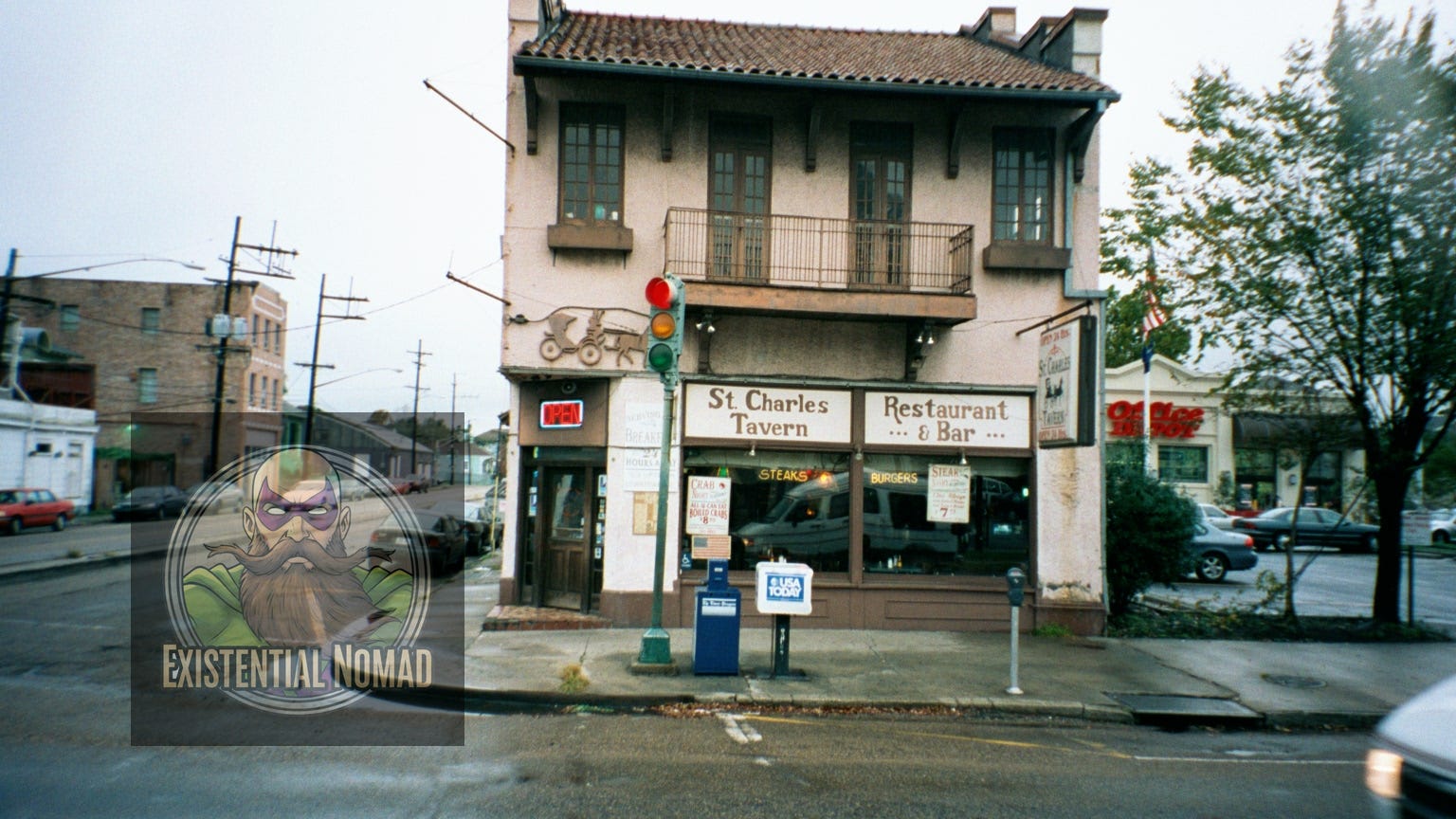
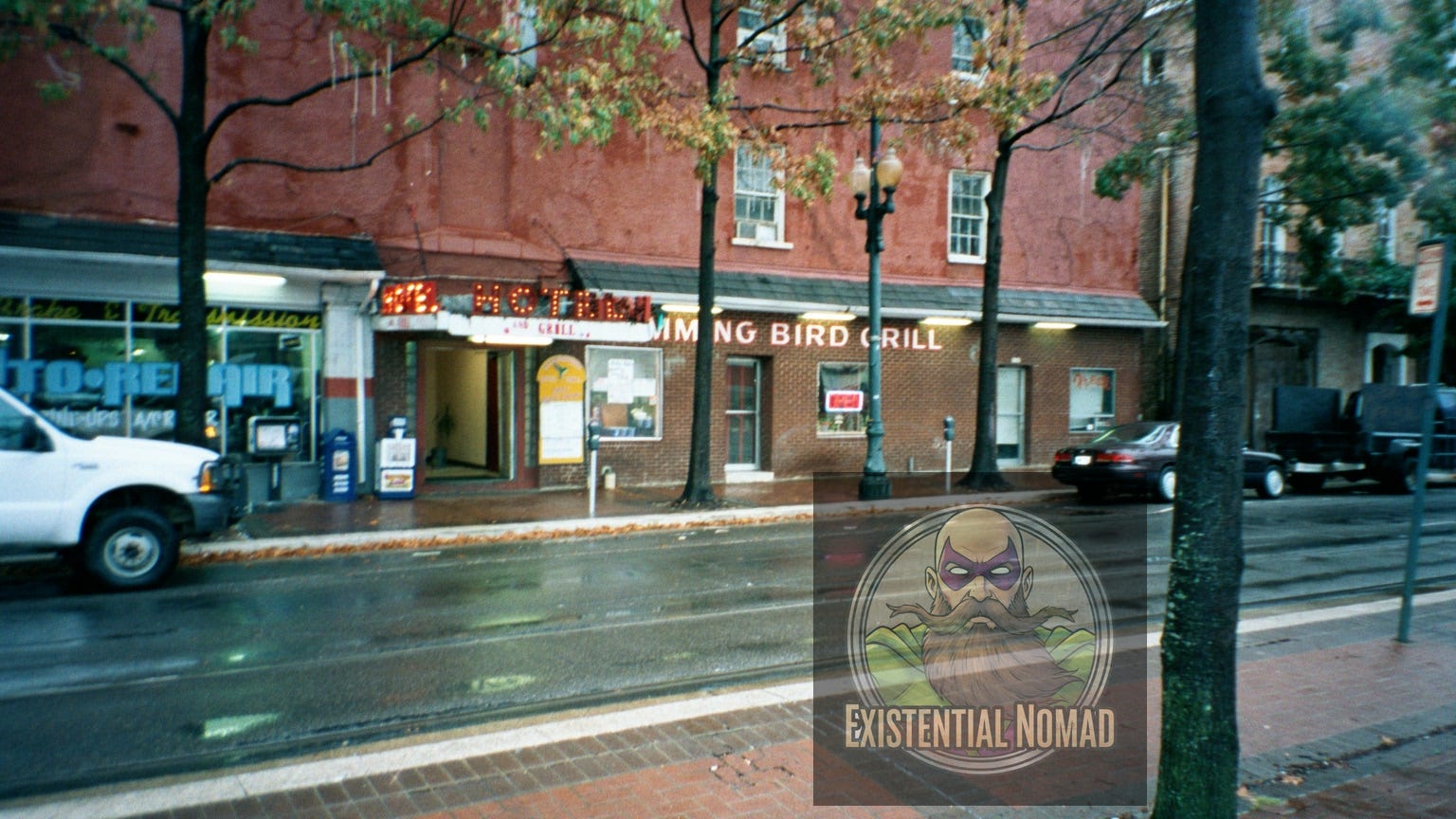
But things went sideways. One night, there was a terrible flood, and I was in the middle of it. I was under the influence of LSD, and as the rainwater rose, my little red Escort actually started to float down Burgundy (ber-gun-dee), the tires lifting off the ground as if it were a toy in a bathtub. The world outside the window was a distorted, watery kaleidoscope of streetlights and floating debris. It was a bizarre, surreal scene, and in the chaos that followed, I lost everything: my apartment, my car, and most of my belongings. For a while, my address was the Hummingbird Hotel, a brick building with a neon sign out front that glowed faintly at night. I lived out of a small suitcase, a ghost in a strange, transient space, meeting other wayward souls who had ended up there for their own broken reasons. I even made breakfast as a job at the grill. My world felt small and a little broken, and after a few weeks, I decided it was time to cut my losses and head back to Seattle. The drive back was long and quiet, a journey of defeat.
Life went on, but New Orleans never really left me. My soul felt like a part of it was still down there, dancing in the streets. So, after another summer working on Mackinac Island in 2003, I made the conscious decision to give it a second chance. This time, it wasn’t a spontaneous road trip; it was a pilgrimage. I arrived as a chef, ready to embrace the city not just as a tourist, but as a part of its very fabric, to contribute to the culinary heartbeat I had so loved. I wasn't a kid anymore; I was a man with a purpose.
My life took on a rhythm that felt so deeply right. Sundays were for the brass second lines. We’d go to the pleasure clubs, feel the bass drum rumble through the floorboards, the low vibrations a kind of holy sound, and then spill out into the street to follow the band, dancing and shouting with a crowd of people who felt like family. Mondays were sacred. I'd make a huge pot of red beans and rice for my regulars at the Milan Lounge—they pronounced it “my-lan,” and so did I, a tiny key to the kingdom. The place was a dim, sticky refuge, the air always smelling of stale beer and good conversation. After dropping off the goods that gave me a nice bar tab for my trouble, it was off to Joe’s Cozy Corner to catch the Rebirth Brass Band. The room would be packed, the energy a palpable wave of sweat and joy, and of course, get some free red beans, a New Orleans custom I'd always loved. Once a month, the whole neighborhood would come together for a block party, and I’d be in the thick of it, cooking a monstrous boil with close to 600 pounds of crawfish. The sacks would arrive, a mountain of live crustaceans, and we’d fill the giant pots, the steam rising into the humid night sky, thick with the smell of Old Bay and garlic. We’d dump the bright red pile on a table covered in newspaper and everyone would gather, peeling and eating, talking and laughing until the sun came up.
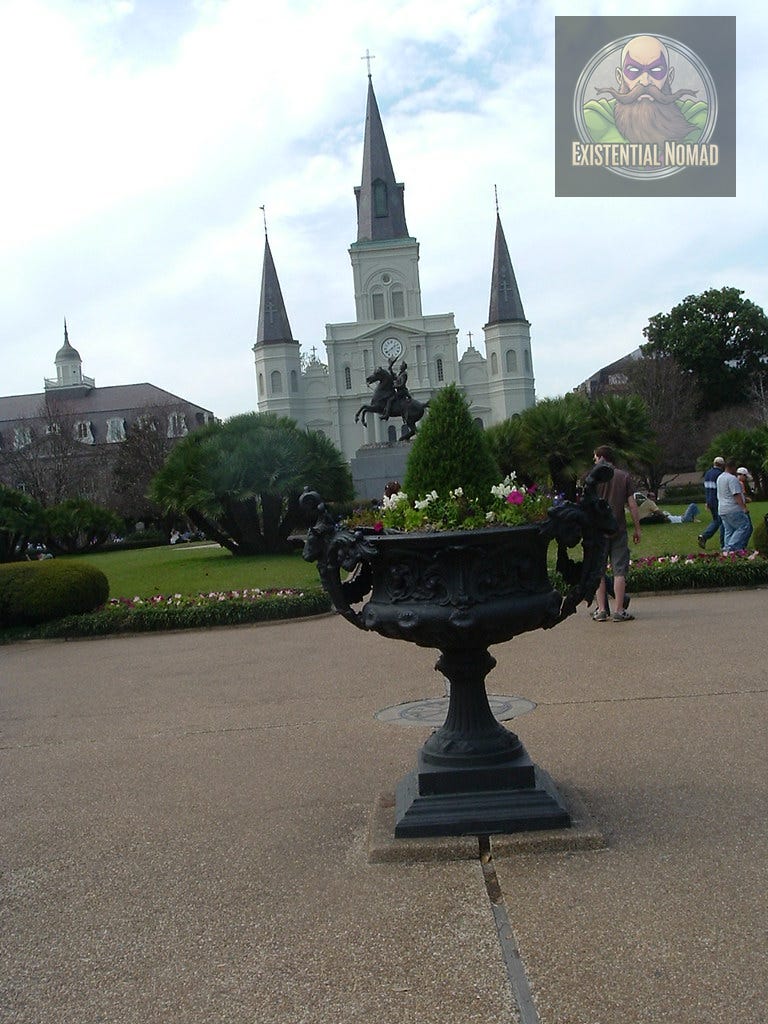
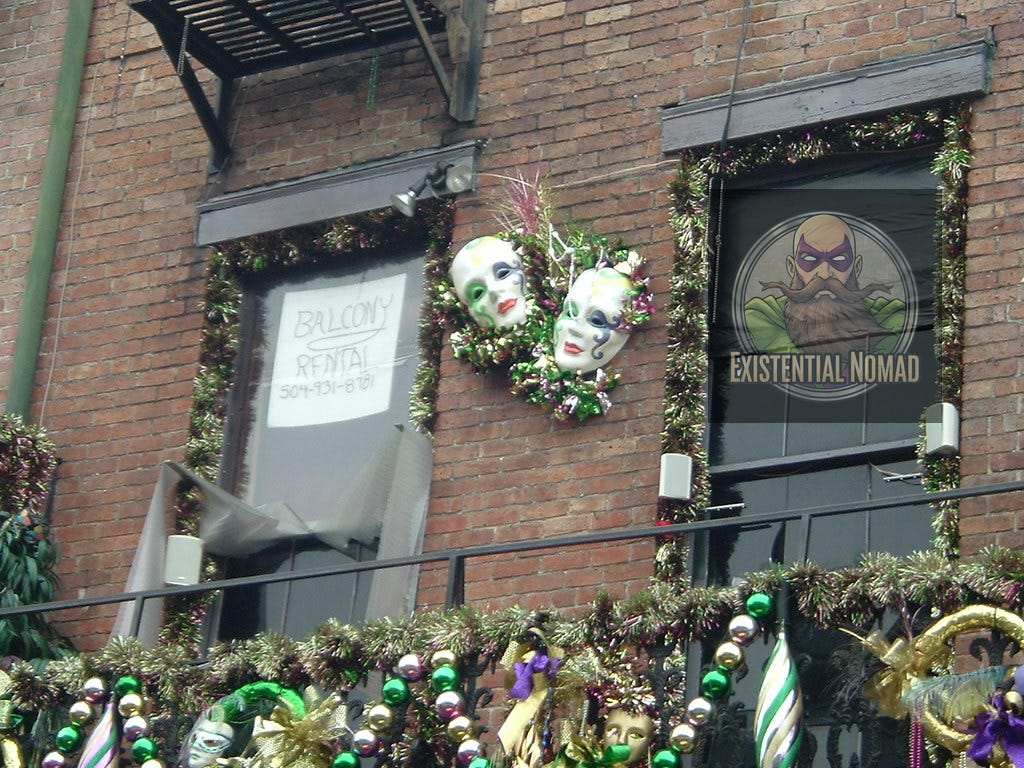
Mardi Gras was a different kind of magic. It wasn’t a spectator sport; it was a total immersion. We'd start our day early on St. Charles Avenue, a blur of purple, green, and gold, and as the parades rolled by, the ground shaking under the weight of the floats, we’d revel. The ZULU parade was our favorite, a whirlwind of black and gold floats, riders in blackface, and the coveted coconut throws that felt like a lifetime achievement to catch. From there, we’d walk, stumbling through a chaotic sea of people, from the elegance of the Garden District into the madhouse of the French Quarter, and then on to the Marigny, where the street party on Frenchman Street was always alive with music and celebration. My feet would ache, my head would spin, but my heart would be full.
But, as it had before, my time in New Orleans came to a natural close. The restaurant I was working at shut its doors, and the city, in its way, let me know it was time to move on. I packed up and headed back to Mackinac Island for what I knew would be my final summer there.


My two stories in New Orleans both ended with me leaving, but they couldn't have been more different. The first time, I was running from disaster, from a life that had unraveled in a flood of desperation and loss. The second, I was walking away with a deep sense of gratitude and a lifetime of memories, a full chapter closed with a bittersweet smile. That city, with its humid embrace and its resilient spirit, taught me what it meant to belong. And even though I now live here in Florida, my soul still holds a piece of it—the taste of red beans, the rumble of a bass drum, the scent of jasmine on a hot night—a constant, soulful reminder of the place that welcomed me twice, and changed me forever.
