
Resistance is Not Terrorism
Unpacking the "Antifa" Boogeyman

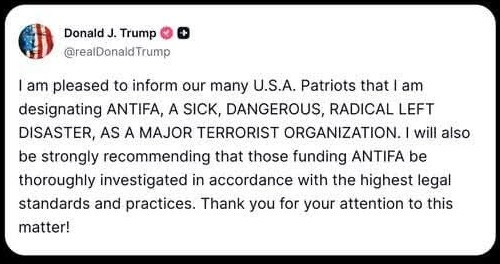
A recent social media post by Orange Hitler McFuckstick (Trump), in a fit of feigned intelligence and audacious ignorance, declared "antifa" a terrorist organization. This predictable outburst from a man who embodies the very principles we oppose has once again ignited a firestorm of debate. But to those who identify with the antifascist movement, this declaration is not only baseless but dangerously misinformed. To put it bluntly, the man has no clue what "antifa" actually is. It is, perhaps, tragically unsurprising that a fascist would be so quick to label the very concept of antifascism as a terrorist ideology. His words are a desperate attempt to vilify a shadow, to create a tangible enemy out of a belief system that fundamentally threatens his worldview.
For those of us who are unapologetically antifascist, the term "antifa" is simply a shortening of the word. It is not, and never has been, a formal organization. There are no headquarters, no hierarchical structure, no charismatic leaders, and certainly no membership dues. Antifa represents a decentralized, grassroots ideology embraced by a diverse group of individuals united by a single, core principle: the opposition to fascism and fascist ideologies in all their forms. It is a verb, an action, a stance—not a noun. The notion that right-wing pundits and their followers are oblivious to this simple fact is, frankly, laughable. They need a monolithic enemy to fear, so they invented one.
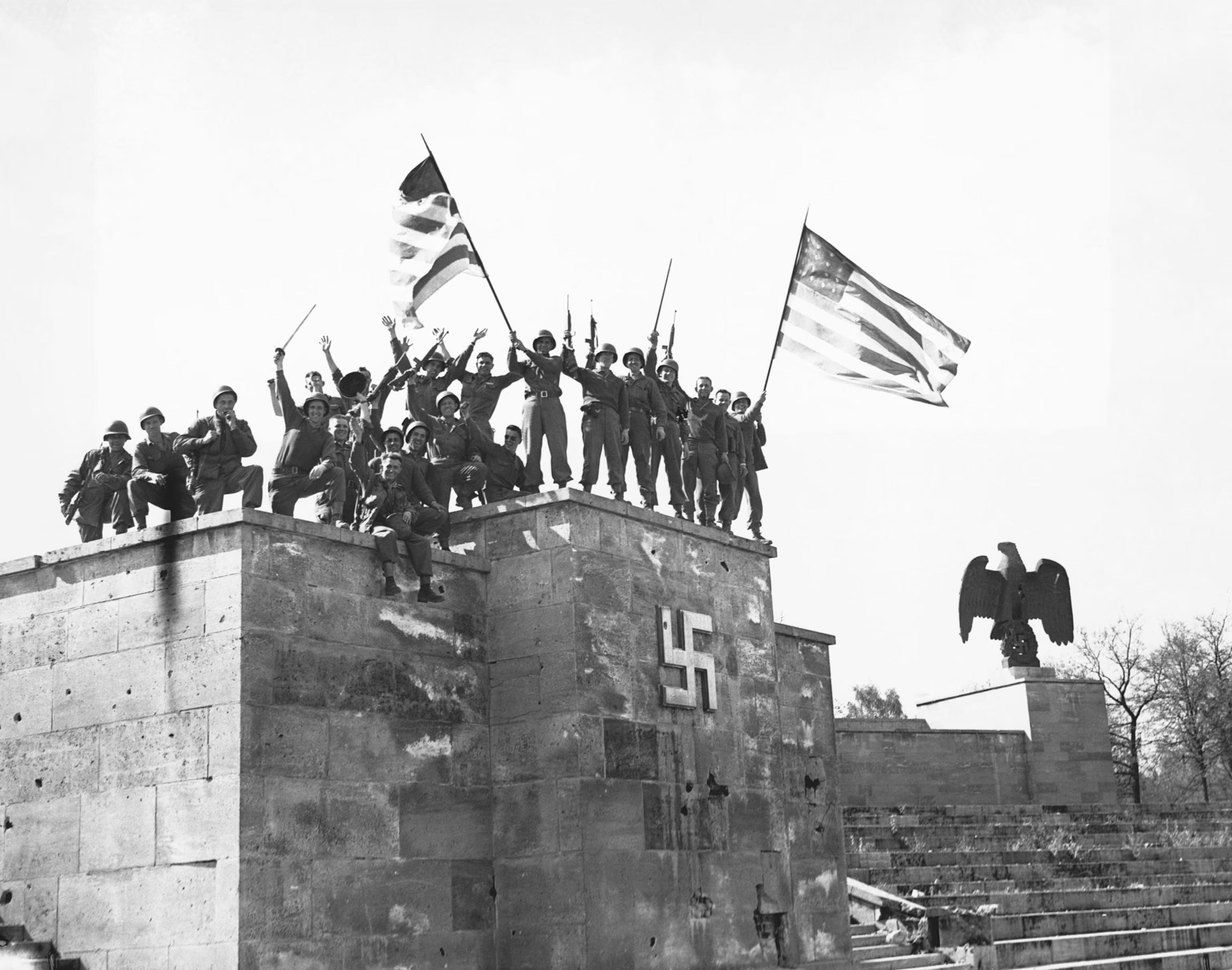
The irony of this political theater is staggering when viewed through the lens of history. Let's not forget that the United States government itself was vehemently "antifa" during World War II. When American soldiers stormed the beaches of Normandy, they weren't fighting a vague concept; they were fighting fascists. When the nation rallied to defeat Hitler's Nazism and Mussolini's Blackshirts, it was engaged in a global act of antifascism. By Trump's own twisted logic, the "Greatest Generation" would be considered a terrorist cell. The brave men who fought and died to stop the spread of fascism across Europe were, in the purest sense of the word, antifascists. To now label that same ideological stance as "terrorism" is a slap in the face to their memory and a perversion of our own history.
This historical amnesia is what allows the current "Anti-antifa" sentiment, championed by violent gangs like the "Proud Boys" and "The 3%" to fester. Their position is nothing short of a public admission of their own fascist leanings. The logic is simple: if you are against the anti-fascists, what does that make you? The math isn't difficult. At this point, it could be argued that the entire Republican party, with a few dwindling exceptions, has veered into fascist territory, embracing authoritarianism and demonizing any who oppose it.
The methods employed by those who call themselves "antifa" are as varied as the individuals themselves. The vast majority are nonviolent, choosing to disrupt and expose fascist activities through tactics fit for the modern age, like doxxing and public call-outs. Their goal is to create chaos for fascists in the public sphere, to pull back the curtain and make it clear that their hateful ideologies will not be tolerated or allowed to hide in the shadows. However, it is also true that not all antifascists are pacifists. Some, including myself, believe in meeting violence with violence. We provide security at protests, creating a line of defense for the nonviolent against the inevitable aggression of those who wish to silence them. This isn't about initiating conflict; it's about finishing it. It's about ensuring that a bigot with a lead pipe doesn't strip away a protester's right to speak. As the saying goes, "when you go far enough left, you get your guns back."
Ultimately, the idea that "antifa" can be classified as a terrorist organization is, and always will be, fundamentally absurd. How can an ideology, a decentralized movement with no formal structure, be an "organization" at all? The continued insistence on this mischaracterization is a deliberate and dangerous political tactic. It is a strategy to silence dissent, to frighten the public, and to paint any and all opposition to a rising tide of American fascism with the broad, ugly brush of "terrorism." But let me be unequivocally clear: resistance to fascism is a moral imperative. It is not, and it never will be, terrorism.
Did I see Bill Weinberg's ghost fly through here?